

Can You Build a Pool on a Sloped Backyard in Utah? Costs, Challenges & Design Ideas
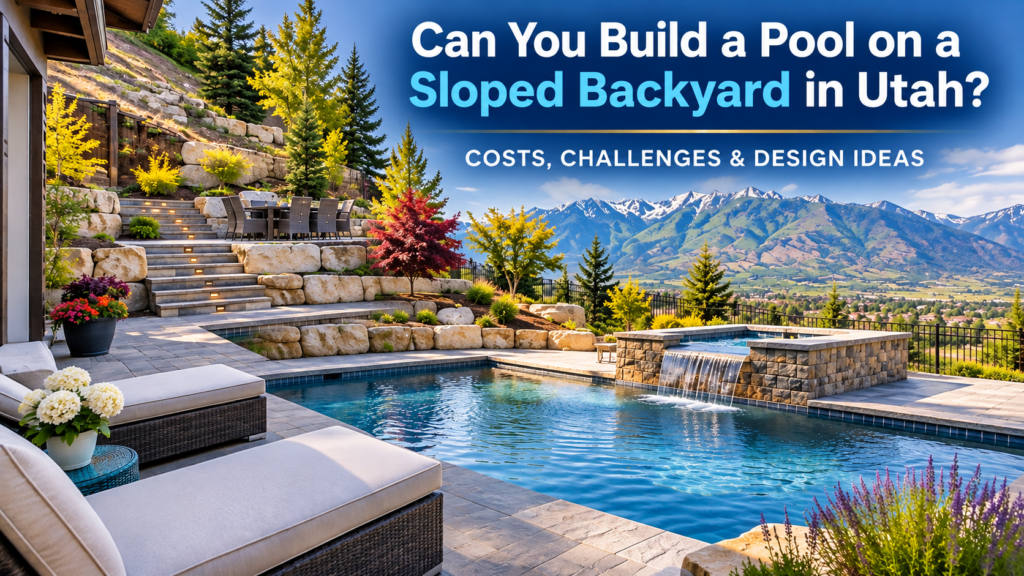
A sloped backyard can make building a swimming pool seem impossible. Maybe your property drops several feet toward the back fence, sits against a hillside, or has an uneven layout that doesn’t seem suited for a traditional inground pool. For homeowners throughout northern Utah, these challenges are fairly common. Between the foothills of the Wasatch Mountains, hillside neighborhoods, and properties with significant elevation changes, not every backyard offers a perfectly level place to build. But here’s something many homeowners don’t realize: a sloped backyard doesn’t automatically prevent you from building a swimming pool. In some cases, the slope can actually become one of the most interesting features of the design. The key is understanding what your property will require before construction begins. Excavation, retaining walls, drainage, structural engineering, equipment access, and the pool’s position within the yard can all affect the project’s cost and complexity. If you’ve been wondering whether you can build a pool on a hill or uneven backyard in Utah, here’s what you should know before ruling out your property. TL;DR: Building a Pool on a Sloped Yard in Utah Quick Answer: Can You Build an Inground Pool on a Sloped Backyard? Yes. Many sloped backyards in Utah can accommodate an inground swimming pool with the right design and construction approach. Depending on the property’s elevation changes, builders may use grading, retaining walls, engineered pool structures, or a combination of these methods to create a stable installation. However, the feasibility and cost depend on site-specific conditions, including soil stability, excavation access, drainage, property setbacks, and local engineering requirements. A professional site evaluation is necessary before determining which construction method is appropriate. Why Sloped Backyards Are Common in Northern Utah Utah’s landscape is one of the reasons so many homeowners love living here. Mountain views, hillside neighborhoods, and properties overlooking the valley create beautiful settings for outdoor living. Those same features can also complicate backyard construction. A home built along the foothills in Draper or Highland may have a significant elevation change between the house and the rear property line. Properties in parts of Bountiful, North Ogden, or other hillside communities may have natural slopes that affect where a pool can be positioned. Even relatively flat-looking backyards can have grading differences that become important once excavation begins. The challenge isn’t necessarily the slope itself. It’s understanding how the land behaves and what will be required to support a permanent, water-filled structure. Swimming pools carry substantial loads, and the surrounding soil, foundation conditions, and drainage must be evaluated accordingly. A pool built on a hillside may need a very different structural approach from one installed on a level suburban lot. That’s why a design that works beautifully on one Utah property might be completely inappropriate for another just a few streets away. Is Your Backyard Too Steep for a Swimming Pool? One of the first questions homeowners ask is whether there’s a maximum slope that makes pool construction impossible. Unfortunately, there isn’t a single percentage or elevation change that answers that question for every property. A gently sloped yard may only require relatively straightforward grading. A steeper property might need retaining walls, specialized foundations, or an elevated structural design. Other factors can be just as important as the slope itself. For example, a backyard with a moderate incline but excellent equipment access may be easier to develop than a relatively flat property where excavation machinery cannot reach the construction area. Similarly, a hillside with stable underlying conditions may present different challenges from a property with uncontrolled fill, groundwater, or unstable soils. Before deciding whether a pool is feasible, a builder needs to evaluate the actual property. The important takeaway is that a difficult backyard isn’t necessarily an unusable backyard. It may simply require a different design and construction strategy. How Pool Builders Handle Sloped Backyards There are several ways to incorporate a swimming pool into an uneven property. The right approach depends on the site, the homeowner’s goals, and the engineering requirements. Grading the Yard to Create a Level Pool Area For properties with relatively modest elevation changes, grading may be the most straightforward solution. This involves reshaping portions of the yard to establish a suitable area for the pool and surrounding patio. Depending on the existing terrain, soil may need to be excavated from higher areas, removed from the property, or placed as engineered fill where permitted and appropriate. However, grading isn’t simply a matter of moving dirt until the yard looks level. The finished elevations must work with the home’s foundation, surrounding properties, drainage patterns, and structural requirements. A grading plan that creates a flat pool area but directs stormwater toward the house would introduce a much larger problem. That’s why proper site planning is essential. Using Retaining Walls to Manage Elevation Changes Retaining walls are another common solution for sloped pool projects. They allow different portions of the backyard to remain at separate elevations while providing structural support where necessary. For example, a pool may sit on a level terrace with a retaining wall supporting the higher landscape behind it. On another property, a retaining structure may support the pool deck above a lower portion of the yard. The wall’s design depends on factors such as soil pressure, drainage, height, proximity to the pool, and the loads it must support. Some retaining walls require engineered foundations, reinforcement, and specialized drainage systems. Depending on their size and location, they may also require separate permits or structural review. The important distinction is that a retaining wall near a swimming pool isn’t necessarily just a landscaping feature. It may be a critical structural component of the project. Building an Elevated or Partially Exposed Pool Sometimes the most interesting solution is to work with the slope rather than eliminate it. A custom gunite pool can be designed with portions of the structure extending above the surrounding grade, subject to appropriate structural engineering. This approach can be particularly appealing on properties with substantial elevation changes or scenic views. Instead of